
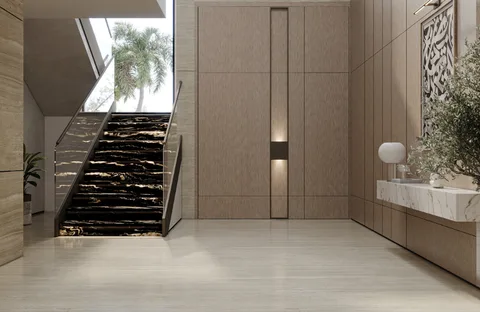
The trends genuinely shaping homes in Dubai and Abu Dhabi in 2026, why each one suits the Gulf climate and market, and an honest verdict on which will still add value in 2032 and which you will pay to remove.
Every January brings a list of trends, and by June most are forgotten. This guide sets out what is genuinely shaping interior design in Dubai and Abu Dhabi in 2026, explains why each trend has taken hold in this climate and market, and sorts them honestly into what will still add value in 2032 and what you will pay to remove.
Warm minimalism replaces grey minimalism
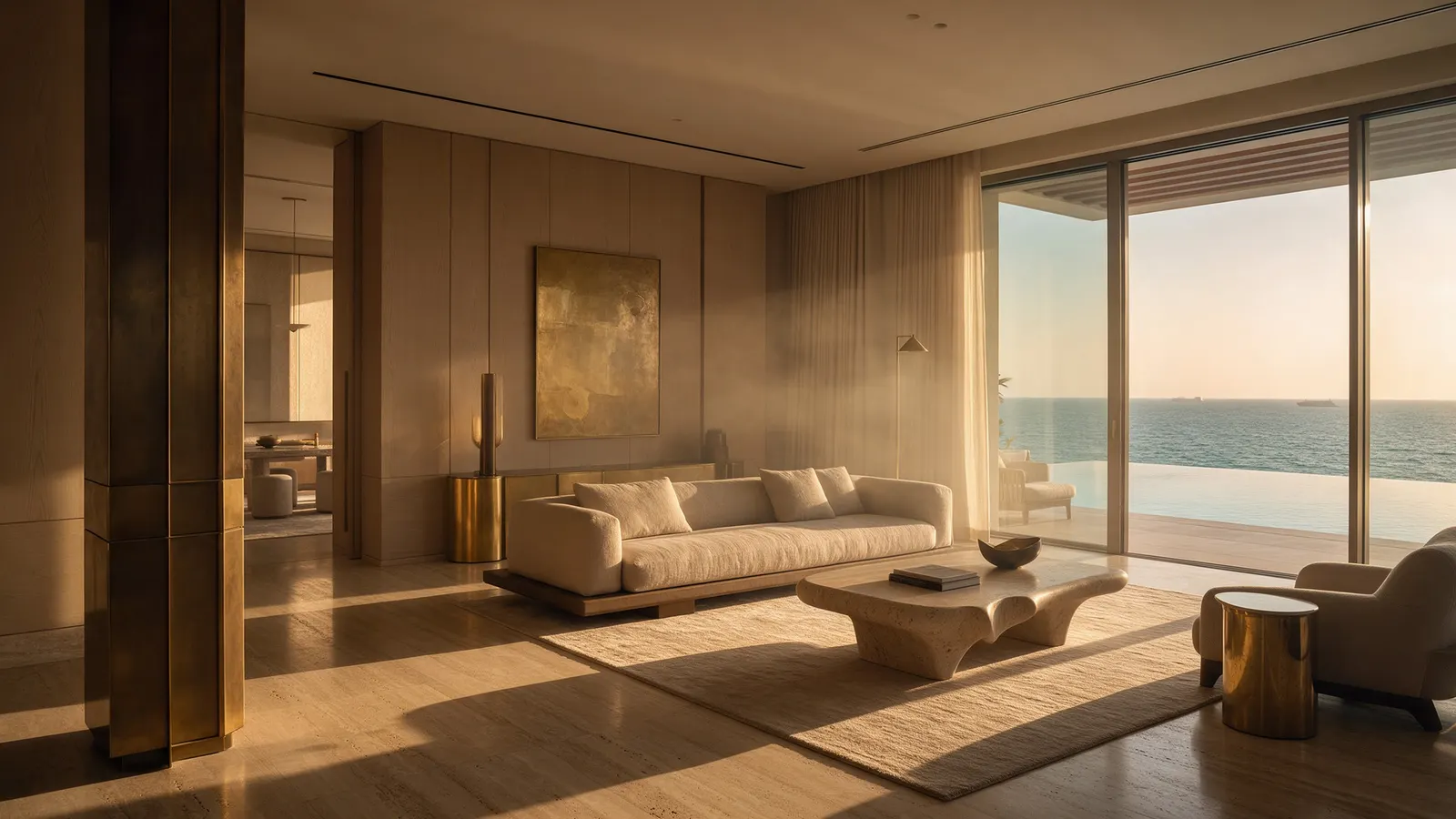
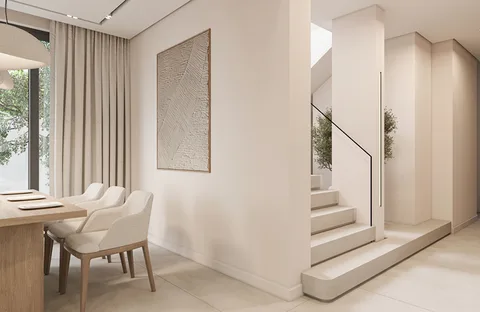
The cool grey, white-on-white interior that defined Dubai apartments for a decade has given way to warm minimalism: the same restraint and clear surfaces, but in sand, oatmeal, clay, warm white and soft taupe, with oak, walnut, travertine and linen doing the talking. The appeal is practical as well as aesthetic. Warm tones hide dust (a daily reality here), flatter skin under LED light and soften the strong Gulf daylight. They also photograph well and offend nobody, which is why the Frond E Palm Jumeirah renovation for resale was specified in exactly this palette.
Biophilic design, adapted for 45C
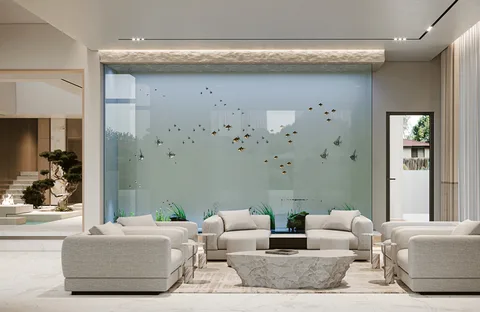
Biophilic design means bringing nature into the building: daylight, plants, natural materials, views and water. In Europe that often means big glass. In the UAE, big glass without shading is a cooling bill. The adapted version that works here:
- Deep reveals, mashrabiya screens and external louvers that let light in and keep direct sun out.
- Internal courtyards and light wells, the traditional Gulf answer, which cool through shade and air movement.
- Living walls and large planters in the entrance, the majlis and bathrooms, with irrigation planned at first fix rather than retrofitted.
- Natural stone, timber and lime plaster with visible texture rather than printed imitations.
- A water feature you can hear from the seating, indoors or out.
At The Pearl Jumeirah custom villa the brief was a light-filled, multigenerational home planned on Vastu principles, and the daylight strategy, not the finishes, was the first design decision.
Smart home integration becomes standard
Lighting scenes, climate schedules, motorised blinds, security cameras and a video doorphone are now specified in most mid-range renovations, not only in luxury ones. The important shift in 2026 is from gadgets to infrastructure: structured cabling, a central rack, a proper Wi-Fi mesh and lighting circuits designed for scenes from the start. The Atlantis The Royal two-bedroom apartment we fitted out included a bespoke automated TV wall and floating beds; the automation works only because the electrical design and the joinery were coordinated from the first drawing. Energy-efficient LED, occupancy sensors in utility areas and water-saving fixtures are now the baseline rather than a green extra.
Flexible spaces
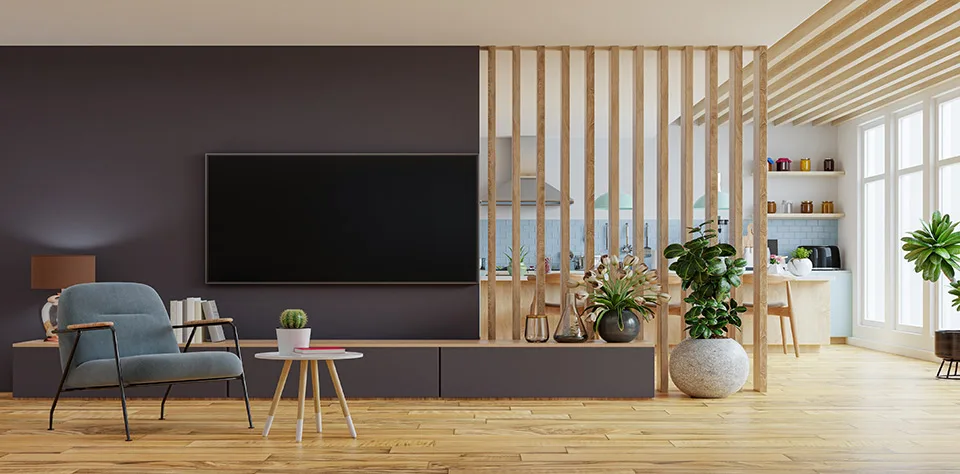
Hybrid working has settled into a permanent pattern, and homes are being planned with rooms that change role across the day: a study that becomes a guest room with a wall bed, a majlis that opens to the living room through pocket doors for large gatherings, a playroom that will be a teenager's study in five years. The design moves that make flexibility real are built-in storage so a room can be cleared quickly, sliding or pocket doors rather than hinged ones, and power and data in more than one place.
Materials and finishes
| Material | Where it is used in 2026 | Lasting value? |
|---|---|---|
| Matte quartz and porcelain slabs | Kitchen counters, bathroom walls, feature walls | Yes: durable, low maintenance, neutral |
| White oak and walnut | Joinery, flooring, ceilings, wall panelling | Yes: timeless in warm palettes |
| Travertine and limestone | Floors, majlis walls, bathrooms | Yes, if honed and sealed properly |
| Micro-cement and limewash | Walls, bathrooms, stairs | Mostly: excellent from specialists, patchy from generalists |
| Textured and fluted panels | Headboards, TV walls, bar fronts | Partly: fluting is already everywhere, use it sparingly |
| Brushed brass and bronze | Taps, handles, lighting | Yes in moderation, one metal per room |
Colour: neutral base, jewel accents
The 2026 palette pairs a neutral envelope (warm white, sand, greige) with jewel tones used as accents: emerald in a velvet sofa, sapphire in a powder room tile, amber in glass pendants, oxblood in a study. The rule that protects your investment is simple: put colour on things you can change in an afternoon (paint, textiles, art, one wall of tile) and keep it off things that cost AED 50,000 to replace (kitchens, flooring, bathroom slabs). A painted island is a reasonable gamble; a teal kitchen is not.
Lighting
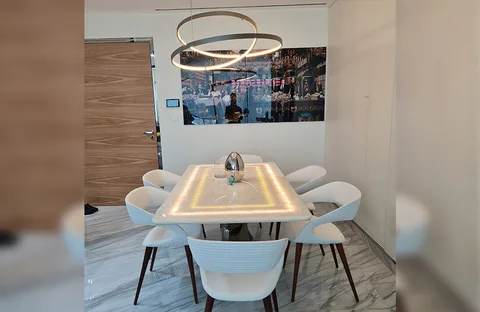
Layered lighting has moved from a luxury to an expectation. A well-designed room in 2026 has at least three layers: ambient (cove or concealed LED), task (under-cabinet, reading, vanity) and accent (wall washers on texture, uplights on plants, pendants as objects). Colour temperature is held at 2700-3000K throughout, every circuit dims, and scenes follow the time of day. The most common complaint we hear at SITES about new Dubai apartments is a grid of cool-white downlights; replacing it is usually the highest-impact change per dirham in a renovation.
Outdoor living
With summers above 40C, outdoor living is designed around shade and the cooler months: louvered pergolas, outdoor kitchens, sunken seating around a fire table, pools with chillers, misting and fans, and drought-tolerant planting on drip irrigation. The Springs 15 bachelor pad was planned around Dubai weather with a new pool, sunken seating and a barbecue pergola so the garden is used in July as well as January. For many buyers the garden is now a second living room.
Fad or lasting value?
| Trend | Verdict | Why |
|---|---|---|
| Warm minimalism | Lasting | Broad appeal, hides dust, photographs well for resale |
| Biophilic design with shading | Lasting | Lowers cooling load, improves wellbeing, suits Gulf building tradition |
| Smart home infrastructure | Lasting | Cabling and scenes age well; individual gadgets do not |
| Flexible rooms with built-in storage | Lasting | Storage is the most requested feature by buyers and tenants |
| Layered warm lighting | Lasting | Changes how every finish reads; cheap relative to impact |
| Outdoor living with shade and chilling | Lasting | Adds usable square metres for 12 months a year |
| Fluted panels on every surface | Fad | Overused by 2026; keep to one feature |
| Colour-changing RGB lighting | Fad | Reads as hospitality, not home |
| Bold coloured kitchens | Fad | Narrows the buyer pool and dates quickly |
| Open shelving instead of wall units | Fad | Dust and clutter in a desert climate |
Before committing to any trend, ask: would a buyer or tenant in 2032 pay more for this, or budget to remove it? Kitchens, bathrooms, open-plan living, a resort-style master bath and outdoor living are the proven value drivers in Dubai. Most of the rest is taste.
Trends should live in the cushions and the paint. The joinery, the stone and the lighting should outlast them.
Design with SITES
SITES Design & Build is a boutique interior design, fit-out and project management firm in Al Quoz, Dubai, delivering villas, apartments, offices and retail across Dubai and Abu Dhabi. Our designers and engineers each bring 15 years or more of experience, and our own joinery and upholstery workshop builds the custom wardrobes, panelling and furniture that make these interiors work. Whether you are planning a villa renovation, a commercial fit-out or a single room, call +971 56 684 1636 or email hello@sitesdxb.com to arrange a consultation.
Frequently asked questions
What are the biggest interior design trends in the UAE for 2026?
Warm minimalism in sand and oak tones, biophilic design adapted with shading, smart home infrastructure, flexible rooms with built-in storage, layered warm lighting, sustainable natural materials and outdoor living designed for heat, in both Dubai and Abu Dhabi.
Which 2026 trends add lasting resale value?
Kitchens and bathrooms in neutral durable finishes, open-plan living, a resort-style master bathroom, built-in storage, layered lighting and shaded outdoor living. Renovated villas in communities such as Dubai Hills, The Springs and Arabian Ranches achieve roughly a 12-18 percent premium over unrenovated ones.
Which interior trends are likely to date quickly?
Fluted panelling on every surface, colour-changing RGB lighting, bold coloured kitchens and open shelving in place of wall units. Keep colour and pattern on paint, textiles and accessories that can be changed cheaply.