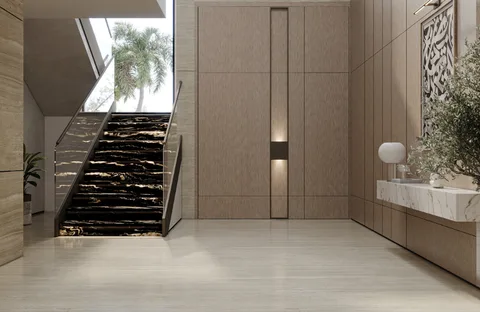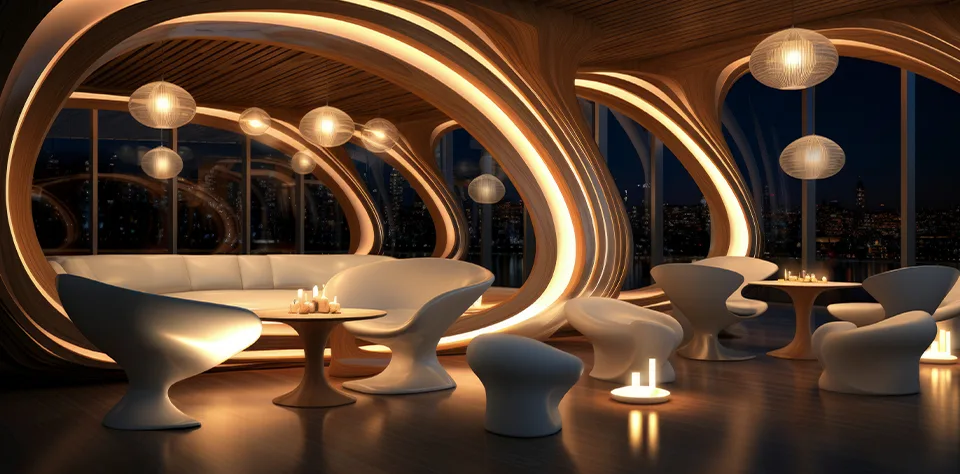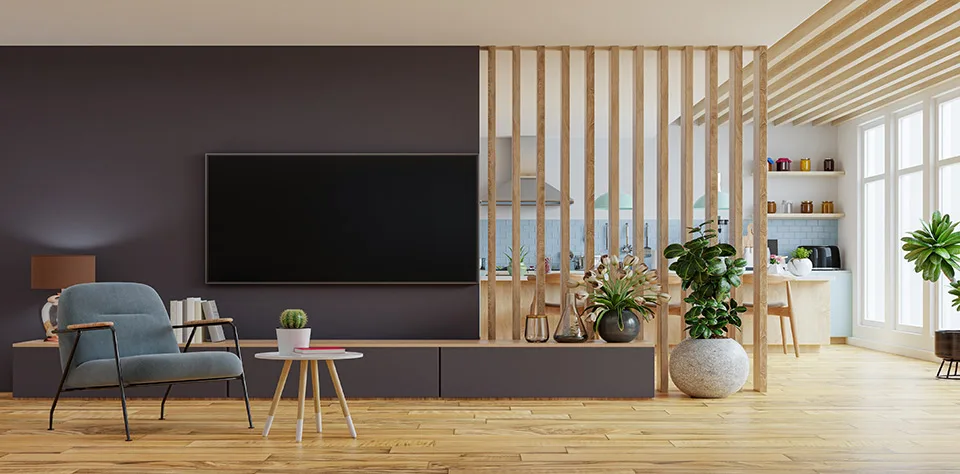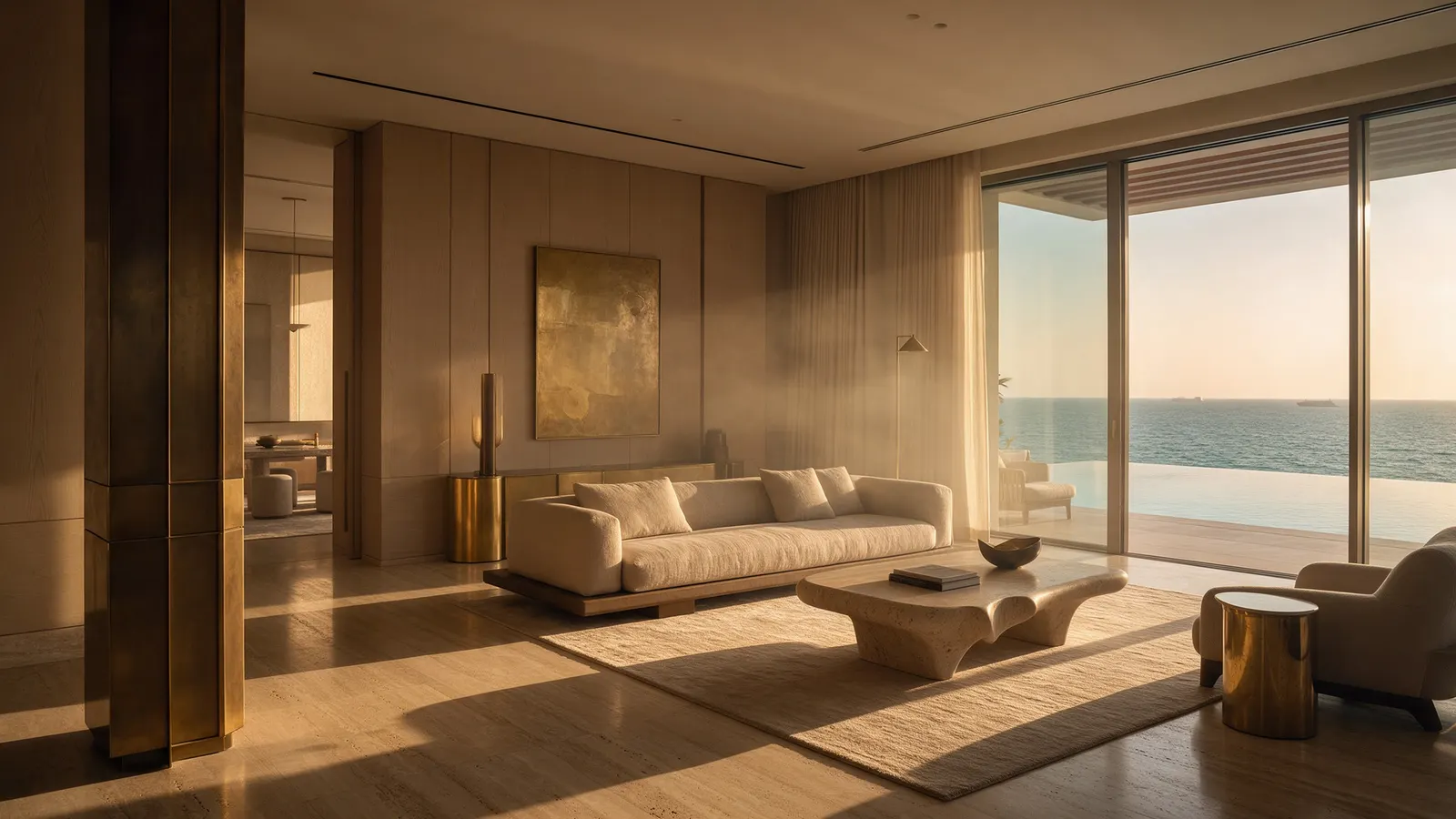

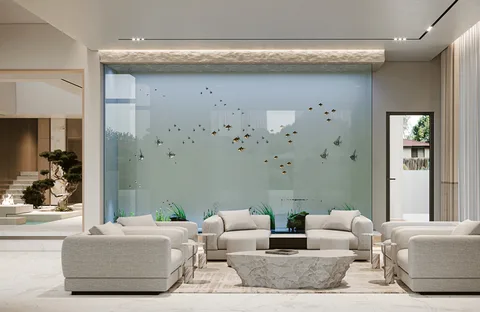
The blended modern-Arabic majlis is the most requested style in Dubai and Abu Dhabi in 2026. Here is how it is built, surface by surface: layout, ceiling, seating, materials and lighting, with typical sizes, budgets and a checklist for briefing a designer.
The majlis is the one room in an Emirati or Gulf home that carries meaning beyond its square metres. It is where guests are received, where family decisions are made and where hospitality is performed in a way that has not changed in generations. What has changed is how it looks. In 2026 the most requested style across Dubai and Abu Dhabi is a blended modern-Arabic majlis: the heritage layout kept intact, the ornament edited down, the materials warm and honest. This guide explains how that style is built, surface by surface, and what it typically costs.
The heritage layout and why it still works
A traditional majlis is a long rectangular room with seating around the perimeter, a clear centre for serving coffee and dates, and the host's seat facing the entrance. Guests are never seated with their back to the door, the most senior guest sits furthest from it, and the room is reached from the house entrance without passing through private family areas. These rules are practical as much as cultural: perimeter seating means everyone can see and speak to everyone, and a separate entrance protects the family's privacy when guests arrive unannounced.
A modern majlis keeps all of this and drops the matching sofas, the heavy pelmets and the ornament on every surface, replacing them with a few considered gestures.
Men's majlis and family majlis
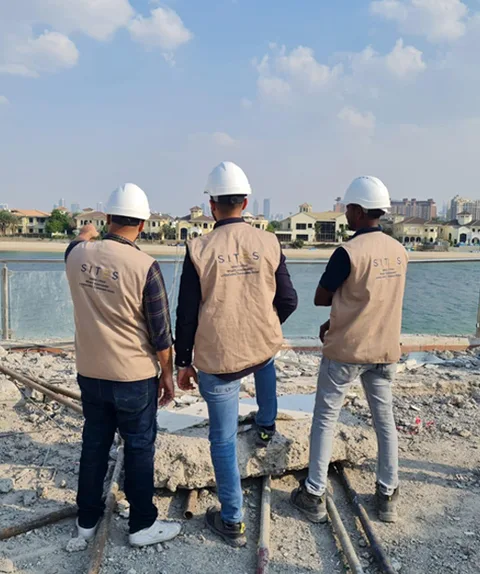
Many Emirati villas have two: a men's majlis near the main entrance, often with its own external door, washroom and tea pantry, and a family majlis deeper inside the house that connects to the living areas. The men's majlis is more formal and larger, designed for 20-40 guests at Eid and weddings; the family majlis is softer and often doubles as the everyday living room. When SITES designs a custom villa, as at The Pearl Jumeirah, both are planned at feasibility stage so that circulation, washrooms and the kitchen's service route work before a wall is drawn.
Sizes: how big should a majlis be?
| Majlis type | Typical size | Seats | Notes |
|---|---|---|---|
| Apartment or townhouse majlis | 20-30 sqm | 8-12 | Often a converted formal living room |
| Family majlis in a villa | 35-50 sqm | 12-18 | Connects to living and dining |
| Men's majlis in a villa | 50-90 sqm | 18-30 | Own entrance, washroom and pantry |
| Grand majlis | 100-200 sqm | 30-60 | Separate wing or annexe for Eid-scale hosting |
Allow 700-750 mm of seat width per person and at least 1,200 mm of clear circulation in front of the seating. A majlis narrower than 4.5 metres struggles to hold seating on both long walls.
The ceiling is the key surface
In a majlis the ceiling does the work that a feature wall does elsewhere, because from a low seat it is what you look at. The 2026 palette of ceiling treatments:
- Coffered plaster: deep recessed panels in a grid, painted a shade lighter than the walls, with cove lighting in the recesses.
- Geometric patterns: eight-point stars and interlocking polygons cut in MDF or gypsum and applied as a raised relief, far subtler than the painted versions of the past.
- Carved timber: walnut or stained oak slats or carved panels, either as a full ceiling or as a central field framed by plain plaster.
- Gilded arabesque: a single central medallion in brass leaf or champagne gold rather than gold across the whole ceiling.
- Height: a majlis ceiling reads best at 3.3-4.0 metres; in a standard 3.0 metre room use a flat raised central panel rather than a dropped margin.
Seating
Perimeter seating comes in three forms. Low floor seating with thick cushions and a continuous back bolster is the most traditional and the most flexible for large numbers. Built-in banquettes at 450 mm in a performance fabric are the modern standard. Individual armchairs in a continuous line suit a formal men's majlis. Keep every seat at the same height so no guest sits higher than another, and run the upholstery in one colour family with pattern carried by the cushions. The SITES joinery and upholstery workshop builds banquettes to the exact wall length so there are no filler panels.
Materials and colour
The blended modern-Arabic look relies on natural materials with visible texture rather than pattern applied on top:
- Travertine or warm limestone on floors and the serving wall, honed rather than polished.
- Walnut or fumed oak joinery for wall panelling, the coffee station and door frames.
- Brass or bronze in handles, lighting and the trim of a mashrabiya screen.
- Mashrabiya screens in timber or laser-cut metal to filter window light and divide the majlis from the entrance without closing it off.
- Textiles in wool, linen and velvet in sand, terracotta, olive and deep teal, with one jewel tone as an accent.
- Walls in warm off-white plaster, limewash or micro-cement.
Lighting
A majlis is used from morning coffee to midnight, so layered lighting is not optional. Cove lighting in the ceiling recesses gives the base glow, a central pendant or cluster of lanterns gives the room its identity, wall washers graze the textured walls, and 2700K dimmable downlights fill in for reading and serving. Put everything on scenes (arrival, gathering, late evening) through a simple controller, and avoid cool-white LEDs entirely; they flatten travertine and timber.
Plan the coffee station like a small kitchen: a sink, hot water tap, under-counter fridge, storage for dallah pots and cups, and a service route that does not cross the guests' sightline to the host.
Budgets
Typical Dubai market ranges in 2026 for a majlis interior, excluding structural work and furniture that is bought rather than built:
| Scope | Typical cost (AED) | What it includes |
|---|---|---|
| Refresh | 60,000-120,000 | Paint, new lighting, reupholstery, rugs, curtains, a simple raised ceiling panel |
| Full redesign | 150,000-350,000 | Coffered or carved ceiling, built-in seating, stone floor, panelled feature wall, coffee station, lighting scenes |
| Grand majlis | 400,000-900,000+ | Large room or annexe, bespoke mashrabiya, slab stone, full joinery, smart lighting and AV, bespoke pendants |
Ceiling work is the biggest single line (AED 25,000-120,000 depending on size and carving), followed by built-in seating and the stone floor.
How to brief a designer
- Say who the room is for: men's, family or combined, and the largest number of guests you host in a year.
- Show reference images for the ceiling and the seating separately. Those two decisions shape everything else.
- List the rituals: coffee service, incense, a television for football, prayer space nearby.
- Set the budget band honestly. A designer can do great work at AED 150,000 or at AED 600,000, but not the second at the price of the first.
- Decide the entrance and washroom positions first. They are the hardest things to change later.
- Ask for 3D views from a seated eye height, not just standing. A majlis is experienced sitting down.
The ceiling is the fifth wall of a majlis and the first thing a seated guest sees. Design it first.
Design your majlis with SITES
SITES Design & Build creates majlis interiors across Dubai and Abu Dhabi as part of a custom villa, a whole-home renovation or as a standalone room, from concept and 3D visualisation through our own joinery and upholstery workshop to handover. Our architecture and design team each bring 15 years or more of regional experience. Call +971 56 684 1636 or email hello@sitesdxb.com to arrange a consultation.
Frequently asked questions
What is the most popular majlis style in the UAE in 2026?
Blended modern-Arabic: the traditional perimeter seating and formal layout kept intact, with a statement ceiling, natural materials such as travertine, walnut and brass, mashrabiya screens and layered warm lighting in place of heavy ornament.
How much does a modern majlis cost in Dubai?
Typical Dubai market ranges in 2026 are AED 60,000-120,000 for a refresh, AED 150,000-350,000 for a full redesign with a feature ceiling and built-in seating, and AED 400,000 or more for a grand majlis annexe.
How big should a majlis be?
A family majlis in a villa is usually 35-50 square metres seating 12-18, while a men's majlis with its own entrance is 50-90 square metres for 18-30 guests. Allow 700-750 mm of seat width per person.